Custom Search


Wednesday, November 18

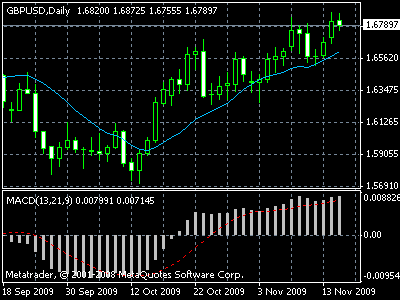
GBP/USD Daily Signal Trend

Increased speculation of a policy shift and a resumption of Chinese yuan appreciation provided some degree of background yen support on expectations of regional currency gains, although the immediate impact was limited.

Sterling continued to exhibit volatility during the week. There were sharp losses following the Bank of England inflation report, but it maintained a generally firm tone for the week as a whole with persistent Euro selling above the 0.90 level while Sterling was able to regain the 1.66 level against the dollar.

The latest RICS house-price and BRC retail sales data was stronger than expected, maintaining the recent trend of generally favourable data. Sterling was, however, undermined on Tuesday by a warning from Ratings agency Fitch that Sterling was vulnerable to a credit-rating downgrade.

In its quarterly inflation report, the Bank of England forecast that inflation would rise significantly over the next few months, but would decline to be slightly below the 2.0% target on a two-year view if interest rates were at expected market levels.

Bank Governor King was again generally downbeat on the economic prospects warning that would need to be a prolonged period of balance-sheet adjustment. King also suggested that the bank was open to all possibilities on quantitative easing, which increased speculation that there could be a further expansion while the Governor also repeated recent comments that Sterling’s decline was helpful.


Wednesday, August 26

EUR/ USD Daily Technical Trend

The US New York Empire manufacturing index strengthened to 12.1 in August from -0.6 the previous month which provided some degree of reassurance over the manufacturing sector. The Philadelphia Fed index also improved to 4.2 from -7.5 the previous month, maintaining the positive tone.

In contrast, the jobless claims data was weaker than expected with initial claims rising to 576,000 froma revised 561,000 the previous month while continuing claims also increased. The jobless data does lag behind the economy as a whole and the manufacturing data has been firmer, but there were fears that the economy will stall quickly under the weight of credit contraction and consumer debt levels.

The construction-related data was slightly weaker than expected with housing starts edging slightly lower to an annual rate of 0.58mn from 0.59mn the previous month while permits were also slightly lower at 0.56mn. The headline data was held back by notable weakness in the multiple-units sector while there was still evidence of an underlying improvement in conditions.

The latest US Treasury capital flows data recorded net long-term inflows of US$90.7bn for June after revised net outflows of US$19.4bn the previous month. Overall capital flows were still negative for the month and monthly data will inevitably be volatile.There was strong buying of US Treasuries for the month which may ease fears over reserve diversification to some extent, although there was a decline in Chinese holdings over the month.

The Euro was unsettled temporarily by a sharp drop in Chinese equity prices which undermined international risk appetite while there was also a sharp fall in German producer prices which reinforced speculation over deflation pressures.

The German ZEW business sentiment index rose to 56.1 in August from 39.5, the highest headline reading for over two years, although ZEW officials were cautious over the outlook due to the underlying vulnerabilities. There were also further concerns over the threat of a credit crunch developing over the next few months which limited any positive Euro impact.

The Euro resisted more than limited selling pressure during the week and was able to secure modest advance as global risk appetite improved from initial lows. The Euro consolidated just above 1.42 against the dollar.

Friday, July 31

GBP/USD Daily Signal Trend

Sterling was unable to regain the 1.65 level against the dollar on Wednesday and dipped to lows around 1.6350 as the US currency secured wider support.

Global equity markets were still relatively firm during the European session with banking shares rising and this provided some degree of protection for the UK currency. It remains the case that Sterling will be much more vulnerable if there is a serious sell-off in equity markets.

The mortgage approvals data recorded a small increase for June which pushed the total to a 15-month high. The bank lending data was very weak with the increase in lending held to GBP0.4bn for June which was the lowest since the series was introduced in 1993.

The weakness in lending will maintain underlying fears over the economy and will tend to unsettle Sterling over the next few weeks. The UK currency was still resilient against the Euro with gains to 0.8575.

Bookmark and Share